

Scientific illustration Invite-only beta
Start from a template. Make it your figure.
Figurome turns a scientific template into an editable vector figure: change the biology, edit the labels, recolour the artwork, and export SVG, PDF or PowerPoint with each icon's licence kept.
Invite-only beta, not open to the public yet. Ask and we will tell you when an invitation is ready.
- 6export formats: SVG, PDF, PNG, JPEG, TIFF and PowerPoint
- 58editable objects in the CAR-T killing template shown here
- 4open-licence artwork libraries, plus Figurome's own drawings
- 3workspace roles: owner, editor and viewer
TourFigure 2, panels a to e
One template, made your own.
Start from a scientific idea.
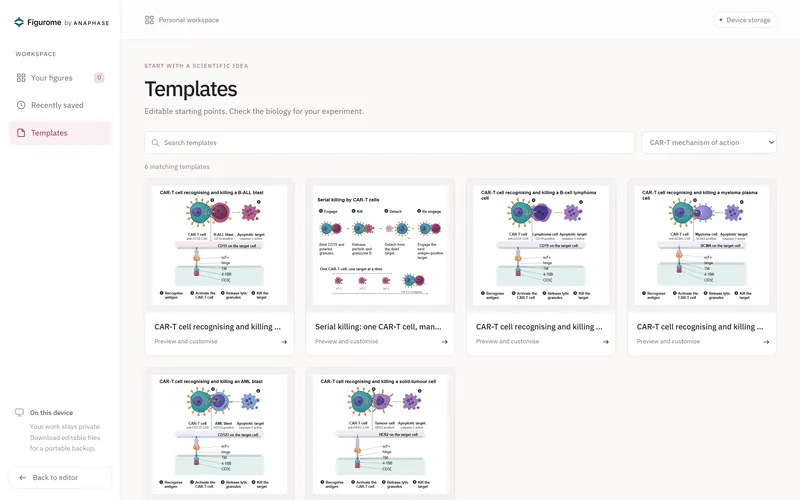
Templates are editable starting points, grouped by topic. Here the gallery is filtered to CAR-T mechanism of action: six templates, from recognising and killing a B-ALL blast to serial killing. The gallery itself tells you to check the biology for your experiment.
Full screenshot
Change the biology before you draw.
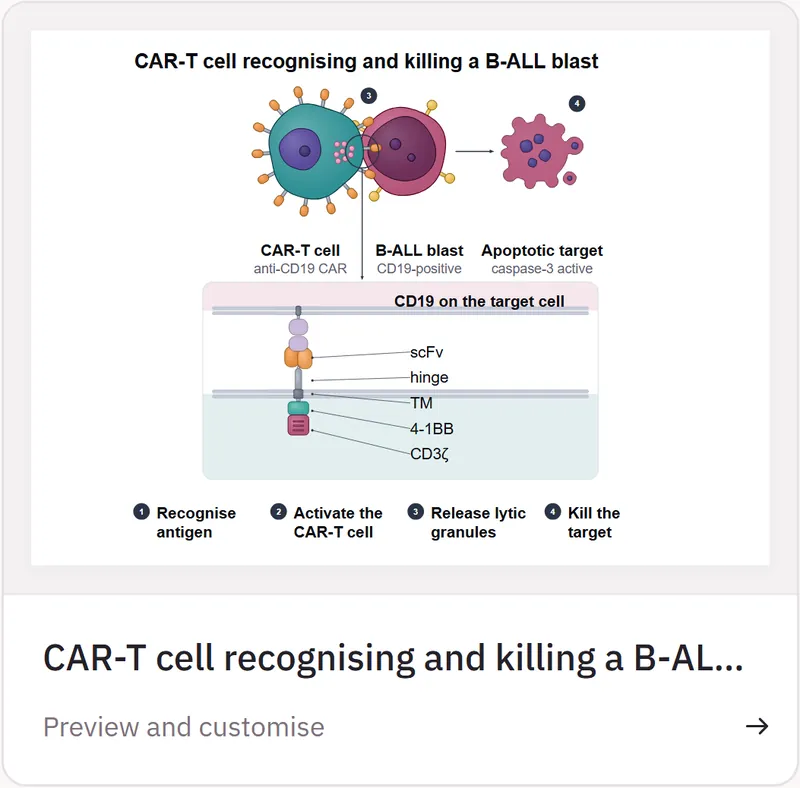
A template has starting parameters. Switch the costimulatory domain from 4-1BB to CD28 and the CAR in the preview is redrawn with a CD28 domain. The target antigen and the binder (scFv or single-domain VHH) change the same way.
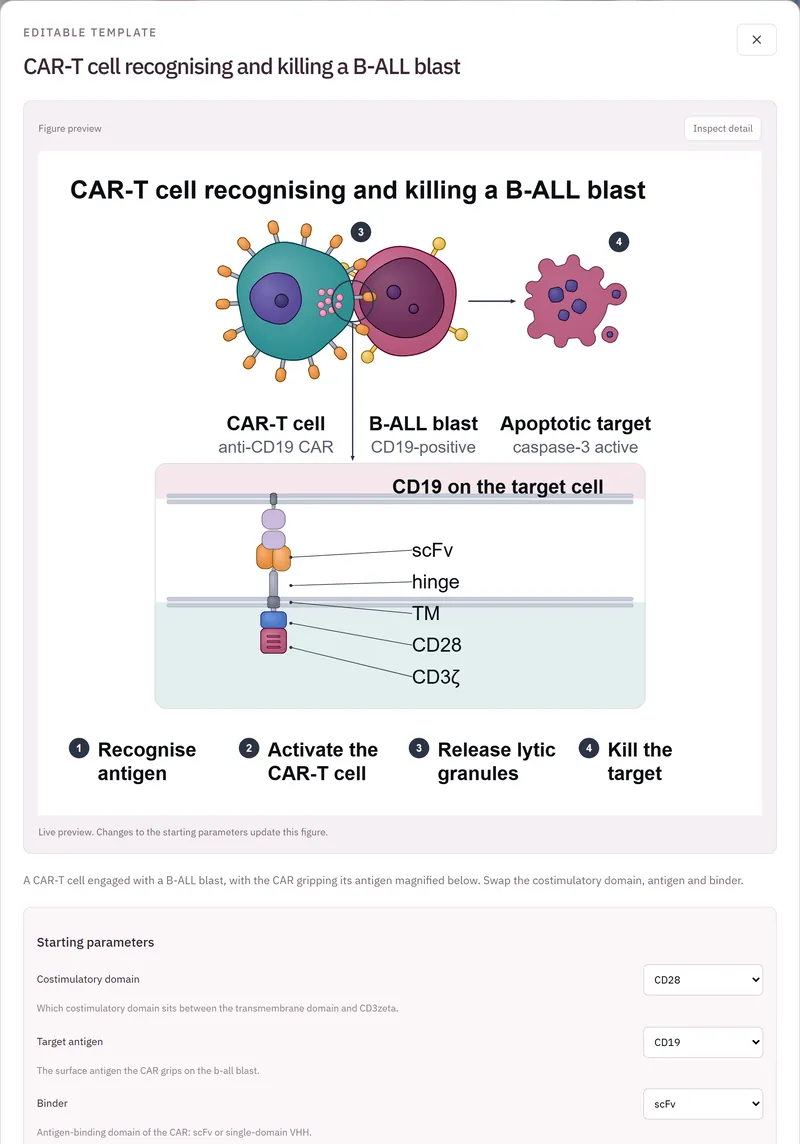
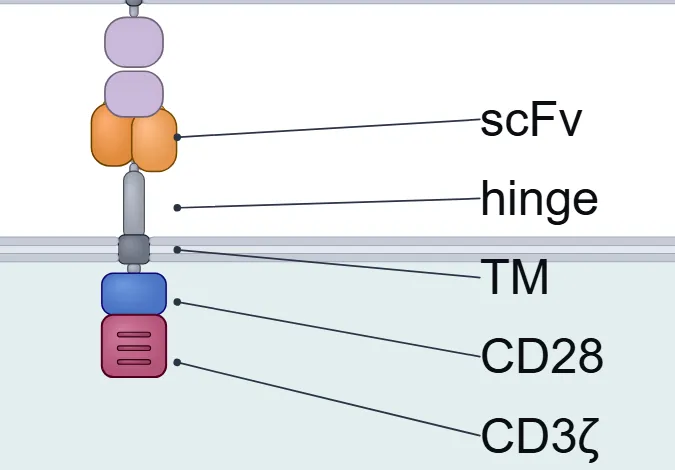
Starting parameters, as Figurome shows themCostimulatory domain: CD28. Which costimulatory domain sits between the transmembrane domain and CD3zeta. Target antigen: CD19. Binder: scFv. Live preview: changes to the starting parameters update this figure.
Full screenshot
Every part is an object you can edit.
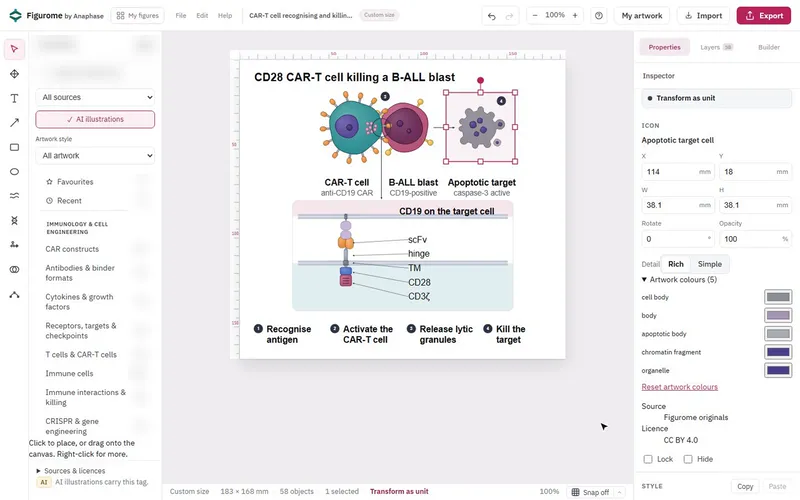
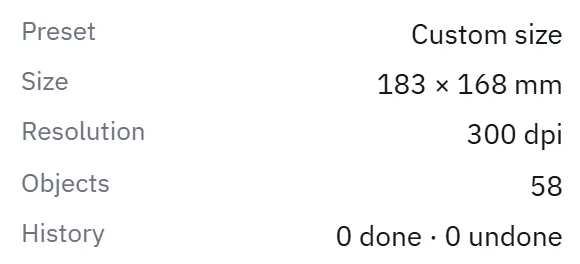
Use the template and it opens in the editor as ordinary objects: 58 of them here, on a 183 × 168 mm page at 300 dpi. Select, move, resize, rotate, group, layer and lock; undo and redo keep count of what you have done.
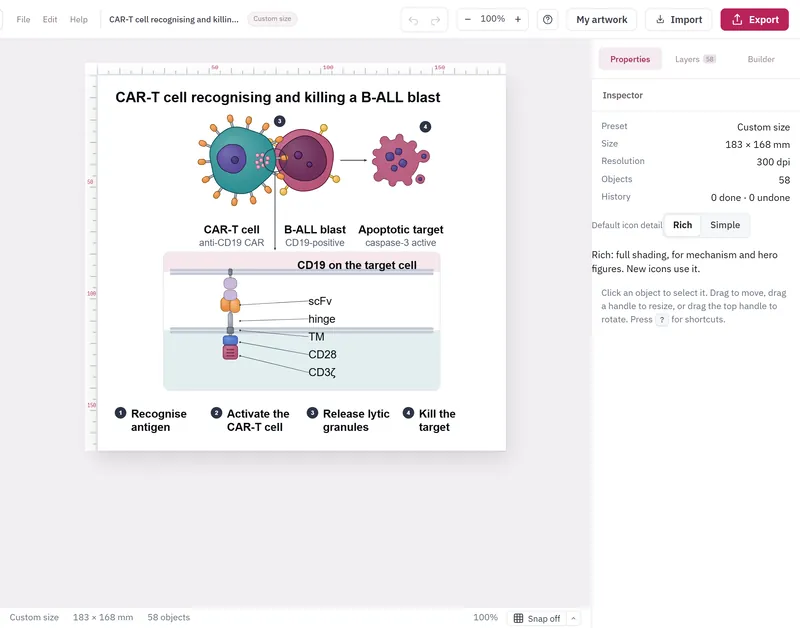
Full screenshot
Edit the words, recolour the artwork.
Click a label and type. Select an icon and its artwork colours are listed by part, here the apoptotic target cell's cell body, chromatin fragments and organelles, each with its own colour and a reset. The icon's source and licence sit underneath, and travel with it into the export.
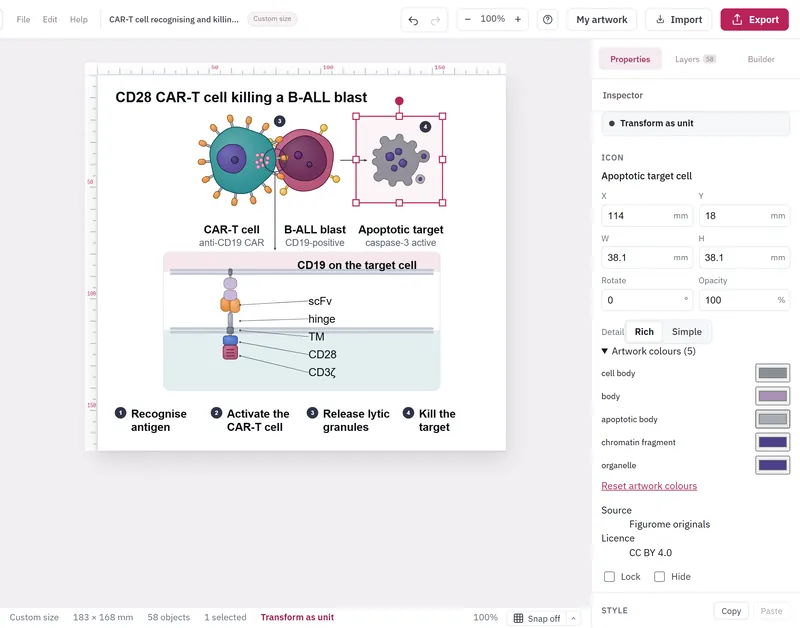
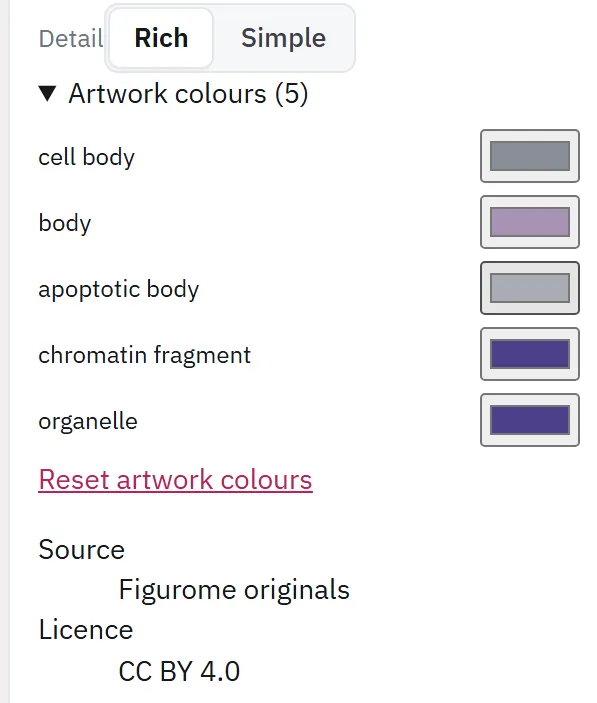
Full screenshot
Export it, still editable.
Editable SVG; PNG, JPEG and TIFF at a set resolution; a one-page vector PDF with embedded fonts; or PowerPoint with native shapes and text. Sizes are exact in millimetres, so set the width your journal asks for and check its other requirements yourself.
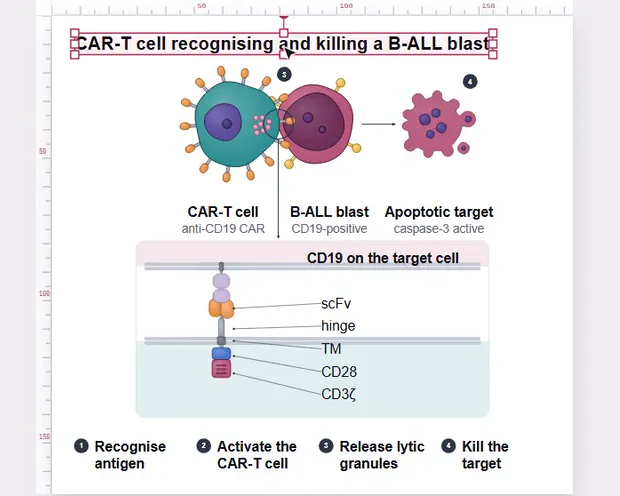
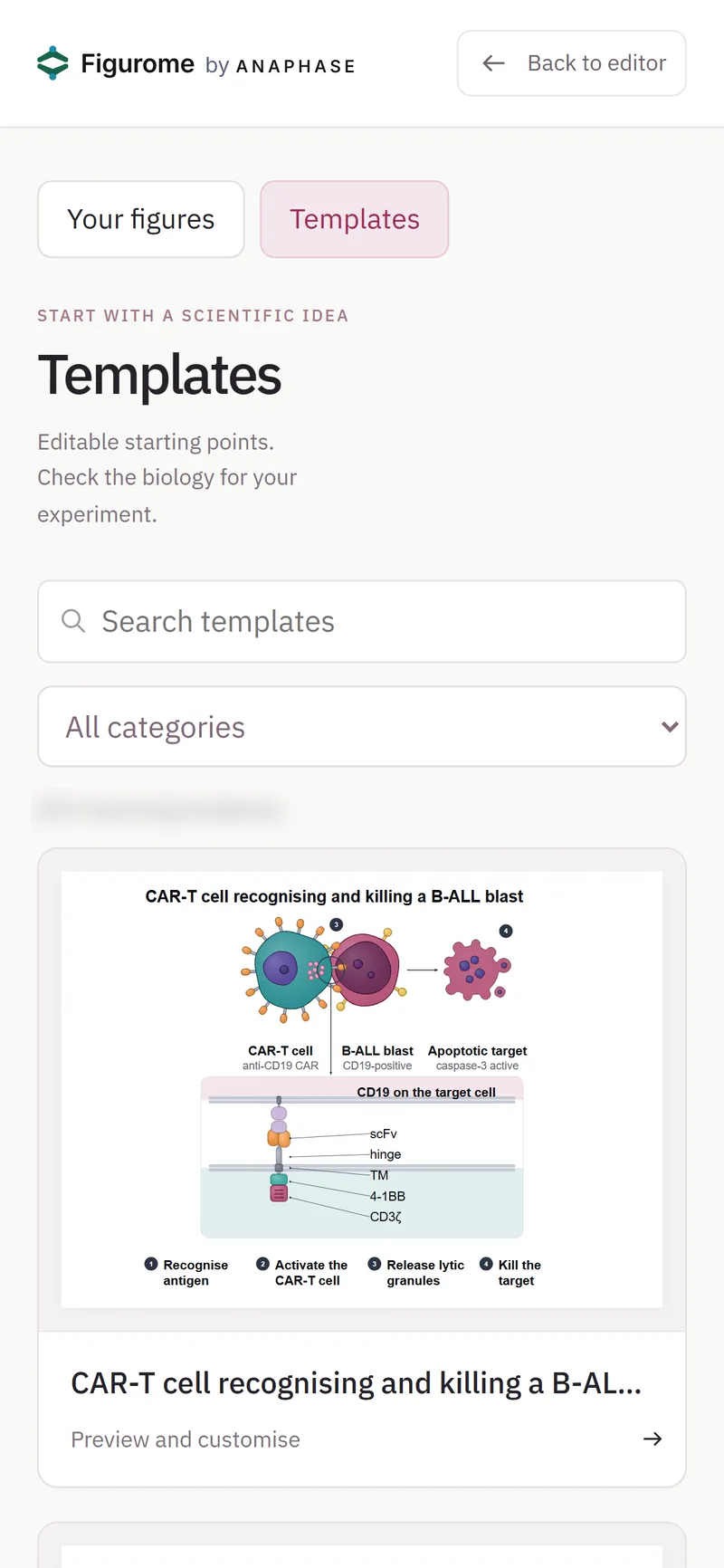
Figure 2 | A CAR-T killing figure in Figurome. a, the template gallery filtered to CAR-T mechanism of action; inset, the gallery at phone width. b, the template's starting parameters with the costimulatory domain set to CD28. c, the template in the editor. d, the title edited and the apoptotic cell recoloured. e, a 5 s loop of the same edits. Outlined boxes mark the area enlarged. Screenshots and recordings of Figurome, recorded on 24 October 2026 from a local pre-release build (commit a54ec80), not a public site, cropped, otherwise unretouched; the evidence below is from release 20261021T162913Z-9df33c385a.
Files in and outexports keep their objects
SVG in, editable files out.
- .svgeditable, in and out
- .pdfone page, vector, fonts embedded
- .pptxnative shapes and text
- .tiffand PNG, JPEG at set dpi
Figurome imports SVG, the shapes on the first slide of a PowerPoint file, and its own editable files. Graphs exported from Plotvera as SVG come in as objects you can edit; that handoff is tested. Plasmidry maps also export as SVG, though that route has not been tested as a handoff.
- Exports keep shapes and text as objects: SVG and PDF stay vector, and PowerPoint gets native shapes and text with pictures you can move separately.
- Each icon keeps its licence and attribution record, so the credit line goes with the figure.
- Edits made later in PowerPoint are not read back. Microsoft PowerPoint itself has not been tested; LibreOffice has.
- No built-in graphs: make them in Plotvera and bring them in as SVG.
- Declaring your rights to an imported image is not an ownership check, and a downloaded copy cannot be recalled.
Evidencerelease acceptance of 21 Oct 2026
Beside BioRender, gaps named.
App shown: a local pre-release build, commit a54ec80, 24 Oct; not deployed; evidence and capability table from release 20261021T162913Z-9df33c385a, 21 Oct.
Figurome's release acceptance checks the editor, accounts, publishing, the assistant, imports and exports, and the artwork records.1 The browser evidence is from Chromium on desktop and emulated touch. The assistant was tested with synthetic responses, not a live provider.
Every feature carries a status
The same four words are used in all four Anaphase tools. No Figurome feature is marked Supported yet: everything is Implemented with validation partial, or Partial with its gaps named.
- SupportedEvery evidence category met and owner-approved. None yet.
- ImplementedAvailable, with automated checks; validation partial.
- PartialAvailable, with named gaps.
- Not supportedAbsent, and we say so.
Figurome beside BioRender, workflow by workflow
Status words are assigned by Anaphase. The gaps column names what Figurome's documents say is incomplete; it does not count BioRender features, and no parity percentage is claimed.1
| Workflow | Status | Figurome has | Named gaps |
|---|---|---|---|
| Canvas and editor | Implemented | Select, move, resize, rotate, group, layer, lock, recolour; undo and redo | Tested in Chromium on desktop and emulated touch only |
| Shapes, lines and text | Implemented | Text, arrows, connectors, membrane and DNA structures | Brushes, freehand drawing and tables not assessed |
| Templates | Partial | Template gallery with starting parameters; personal and workspace templates saved through a publication flow | No named scientific owner, references or review date recorded yet |
| Artwork library and search | Partial | Catalogue search; artwork kept in separate tiers: metadata only, styled vector, raster or AI illustration, quarantined | Most indexed entries have no drawable artwork yet, so no icon count is quoted2 |
| Export and licensing | Implemented | Editable SVG, PNG, JPEG, TIFF, vector PDF and PowerPoint; licence and credit kept for each icon | A rights declaration is not an ownership check; downloaded copies cannot be recalled |
| Graphs | Partial | SVG from Plotvera, tested as a handoff3 | No built-in graphing |
| Collaboration | Implemented | Workspaces; owner, editor and viewer roles; invitations with immediate revocation; version history; stale saves rejected | No real-time co-editing: a conflicting save is rejected, not merged |
| PowerPoint | Partial | Export with native simple shapes and text; first-slide import | Later PowerPoint edits not recovered; Microsoft PowerPoint itself not tested |
| AI assistant | Partial | Allow-listed edits shown as a proposal; apply, reject, one-step undo; up to 30 an hour and 100 a day | Not yet tested with a live provider; AI illustrations are not editable vector icons; hosted AI off |
| MCP and agents | Partial | Local MCP server tested for handshake, edit, export and reconnect | Remote connector for the Claude app not deployed |
AI and connectorsnot yet tested with a live provider
Edit with your own AI assistant, review every change.
- Your own key
Assistant
Edit with your own AI assistant, using your own OpenAI or Anthropic key. It can only propose allow-listed edits (move, label, colour, text size, rotate, remove). Each proposal is shown to you first: apply it or reject it, and undo an applied change in one step. Your key is stored on Figurome's server, encrypted for your account, and the server sends each request to the provider after you consent. A request carries your prompt and a bounded description of up to 150 visible objects, never the artwork itself.
Not yet tested with a live provider: the browser tests use synthetic responses.
- Invited testers
Your own Claude, locally
A local MCP server, which you run on your own computer, lets your own Claude drive the editor. It needs a Figurome source checkout, which is not public. It has been tested for handshake, editing, export and reconnecting.
The remote connector for the Claude app is not deployed. Connector status.
- Not available
Hosted AI
There is no hosted assistant. Hosted AI and charging are switched off during the beta.
You stay the author. AI suggestions are drafts for you to check. Illustrations made by AI are kept in their own tier, carry an AI tag in the library, and are not editable vector icons.
Limitationswhat it does not do yet
Every paper has a limitations section. Here is ours.
- Invite-only beta, not open to the public yet. No self sign-up and no automatic email; account recovery needs an operator code.
- Templates do not yet record a named scientific owner, references or a review date. Check the biology of every figure yourself.
- The artwork library is growing, and most indexed entries do not have drawable artwork yet. We do not quote an icon count.
- The assistant has not been tested with a live provider. Hosted AI is switched off.
- Edits made later in PowerPoint are not recovered, and Microsoft PowerPoint itself was not tested.
- Only the local MCP server works; the remote connector for the Claude app is not deployed.
- No real-time co-editing. A conflicting save is rejected, not merged.
- Tested in Chromium on desktop and emulated touch. Other browser engines and physical phones were not tested.
Where your figures go. Figures save on your device automatically; cloud save is a step you choose. AI requests go through Figurome's server to the provider you pick, after you consent, and never include artwork files. Production backups are held on the same server for now.
Questionsbefore you ask for an invite
Frequently asked questions.
How do I get access?
Figurome is an invite-only beta and not open to the public yet. Email us with what you draw, and we will tell you when an invitation is ready.
What will it cost?
Prices for Figurome are not published, and no charging is enabled during the beta.
Can I use the figures in a paper?
Every icon keeps its licence and attribution record, and exports are sized exactly in millimetres at the resolution you set. Check each icon's credit requirements and your journal's own figure requirements before you submit.
Are the templates checked by scientists?
Not yet. Templates do not record a named scientific owner, references or a review date. Treat each one as a starting point and check the biology for your experiment.
Does it work with Plotvera and Plasmidry?
Through SVG. Graphs exported from Plotvera have been tested as an import. Plasmidry maps also export as SVG; that route has not been tested yet.
Can I use it for clinical work?
No. Figurome is an invite-only beta, for research use only, and not for clinical, diagnostic or treatment decisions.
References
- Figurome release acceptance, release 20261021T162913Z-9df33c385a, 21 October 2026: editor, accounts, publishing, assistant, imports and exports, artwork and readiness. Browser evidence is Chromium; the assistant transport is synthetic.
- Figurome artwork audit, 11 October 2026: most indexed library entries did not yet have drawable artwork. No icon count is quoted.
- Figurome and Plotvera file handoff acceptance, same release: an SVG graph exported from Plotvera opened in Figurome.
Draw the mechanism, keep it editable.
Tell us what you draw, and we will tell you when an invitation is ready.